All politics is local
Date Published
December 5, 2025
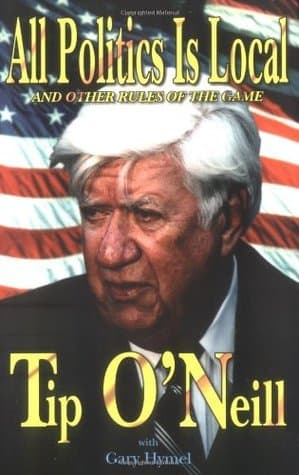
“All politics is local” is a famous saying in American politics, most closely associated with Tip O’Neill, the long-time Speaker of the U.S. House of Representatives. He learned it early in his career when, after losing a local race, a neighbor told him she hadn’t voted for him because “you never asked.” That experience convinced him that no matter how big the issue, voters respond first to whether a politician understands their
daily lives.[i]
At its
core, the phrase means that people care most about the things that touch them
directly: jobs in their town, the quality of local schools, the safety of their
streets, the price of electricity, water, and food. National slogans and grand
ideological debates may dominate TV, but in the voting booth many decisions are
driven by very concrete questions: Did
my road get fixed? Did my representative help when the factory closed? Did
anyone listen when we complained about the hospital?
For
politicians, this has two big implications. First, winning and keeping office
depends less on abstract speeches and more on “retail politics”: shaking hands,
answering phone calls, attending funerals and school events, and solving small
problems for individual constituents. Second, even big national policies must
be translated into local benefits. When a government plans a national jobs or
infrastructure program, smart politicians explain it in terms of specific
bridges, schools, or clinics that will be built in their district. Tip O’Neill
himself practiced this by framing major economic bills in terms of the repairs
and jobs they would bring to particular cities.
In
recent decades, some analysts argue that politics has become “less local”
because of national media, polarized parties, and online campaigns that make
elections more about identity and ideology than about potholes and public
works. Still, even in this environment, candidates who ignore local concerns
usually pay a price. Voters might share a party label or a broad ideology, but
they still expect tangible improvements in their neighborhoods.
So when
we say “all politics is local,” we are really saying that democracy rests on
everyday relationships and concrete results. Power may be negotiated in
parliaments and presidential palaces, but legitimacy is granted—or
withdrawn—street by street, household by household, one voter at a time.
[i] wikipedia